-
Theme and curators 2016

Time
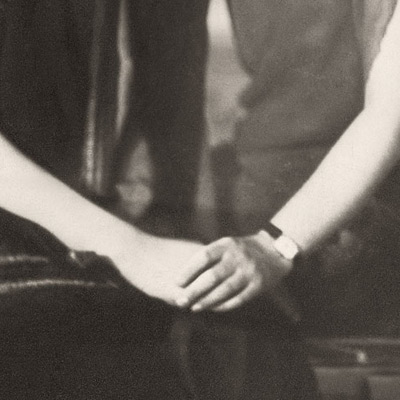
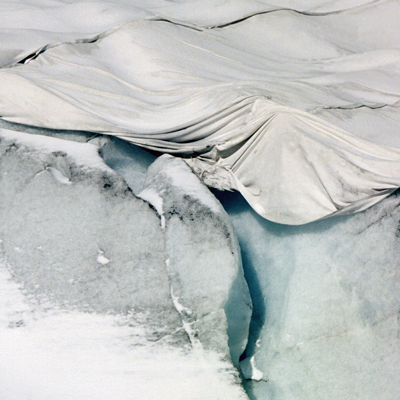
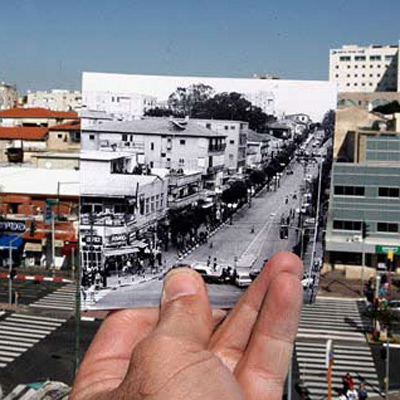
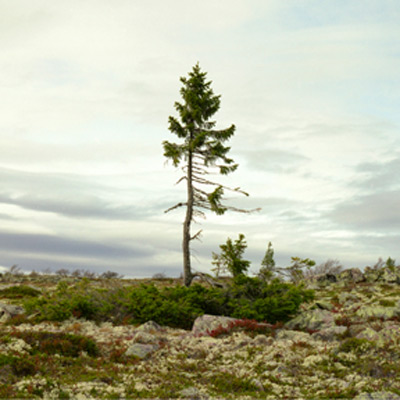
GETXOPHOTO will celebrate its tenth anniversary on September 2016 around the theme time. It will be a special edition and for the first, only and last time will be curated by the current director of the festival, Jokin Aspuru. In his team he will count on the three curators of the festival: Alejandro Castellote, Frank Kalero and Christian Caujolle.Jokin Aspuru
Graduated in Images Science from the Universidad Complutense of Madrid. Ex TV director; he worked in ETB (public Basque television) for 10 years in the news programme, specialized in live broadcastings. Ex journalist; he launched and directed for 10 years the UK, Uribe Kostako Aldizkaria, a cultural magazine written in Basque. As cultural agitator, he has launched the edition of records, fanzines, posters and documentaries as well as quite a few photo exhibitions. He founded GETXOPHOTO and is the director since the beginning.
Sendoa Cardoso
Christian Caujolle
A recognised critic and eminent curator, Caujolle has made an enormous contribution to the world of photography. He collaborated with and was a pupil of Michel Foucault, Pierre Bourdieu and Roland Barthes. He was the graphics editor of Libération, founder of the Agence and gallery VU´, artistic director of Les Rencontres d´Arles and curated international festivals such as the Foto Biennale in Rotterdam and collaborator in PhotoEspaña and the festival Images Singulières in Sète. Since 1983 he has organised several exhibitions and edited monographs on artists including Jacques Henri Lartigue, William Klein, Anders Petersen, Raymond Depardon, Michael Ackerman and Cristina García Rodero. Caujolle has participated in workshops and conferences in many countries in Europe and Asia and served as a jury member for World Press Photo and other prestigious international competitions. Currently he is the director of PhotoPhnomPenh in Cambodia and in 2013 he took over as curator of GETXOPHOTO Photography Festival. He curated GETXOPHOTO from 2013 through 2015.
Juan Gómez
Frank Kalero
Graduated in Audiovisual Communication from the Pompeu Fabra University (Barcelona) He was a resident at Benettonʼs Fabrica (Italy). He was the founder and director of the magazine OjodePez (Spain). Cofounder and director of the magazine Punctum in India. Also in India, he was the cofounder of Goaphoto. He has been the artistic director of the Photography Biennial PhotoQuai 2013 and 2015, in Paris. Master at the Joop Swart Masterclass of the World Press Photo, and president of the jury of the Pride Photo Award, both in Amsterdam. Currently he is engaged in developing an online platform for the multimedia, Screen, New York and as adviser to the Wyng Award, Hong Kong. He curated GETXOPHOTO from 2010 through 2012.
Luisa Dorr
Alejandro Castellote
Professor of photography, editor, writer and independent curator. From 1985 through 1996 he was director of the Photography Department at the Círculo de Bellas Artes in Madrid, where organized the Festival FOCO (1985 to 1989). He has been artistic director and founder of PHotoEspaña in Madrid (1998 to 2000). In 2003 he curated MAPAS ABIERTOS. Fotografía Latinoamericana 1991-2002; C on Cities at the Padiglione Italia in the X Venice Biennale of Architecture, 2006; guest curator for Latin America of the Biennale Photoquai (Museum Quai de Branly) 2007-2009, Paris; Seoul Photo Fair 2010, South Korea and Singapore International Photography Festival (SIPF) 2012 and was director of the Daegu Photo Biennale 2014 in South Korea. In 2015 he was chief curator -with Wang Qingsong and François Hebel- of the First Changjiang International Photography & Video Biennale, Chongqing, China. He is currently director of the Latin American Master of Photography and Visual Arts at the Centro de la Imagen of Lima, Peru. He curated GETXOPHOTO from 2007 through 2009.
Martí Llorens
Artists 2016Lab 2016
Half Life, Michael Ackerman
with Michael Ackerman
Michael Ackerman’s method doesn’t follow tradition, it is not a simple chronicle of events. The pace of his photography is closer to cinematography than traditional documentary photography: images used in sequences, different formats, pictures that appear «wrong», images used as links between other images; all used to compose an essay that does not value where or when the pictures were made but rather attempts to capture a deeper emotional and spiritual truth of the subject. The locations aren’t necessarily recognizable at all. Michael has been moving towards this erasure of geographical and other distinctions in his photographs for some time. There is surely a trajectory away from the constraints of a traditional documentary mode towards a very different way of getting at the world.
During this workshop Michael Ackerman shared with his instinctive and visionary approach to photography and helped to find the own themes focusing on meaning and expression, rather than form and technique. The goal of this workshop was to inspire and help each other get deeper into the territory that we are exploring as photographers, challenge ourselves depending on each individual’s vision, curiosity and sensibility. The point is to photograph what you love, what obsesses you, what you fear. We should feel free to search, experiment, break borders, make mistakes, take emotional risks, all in the goal of getting closer to ourselves.
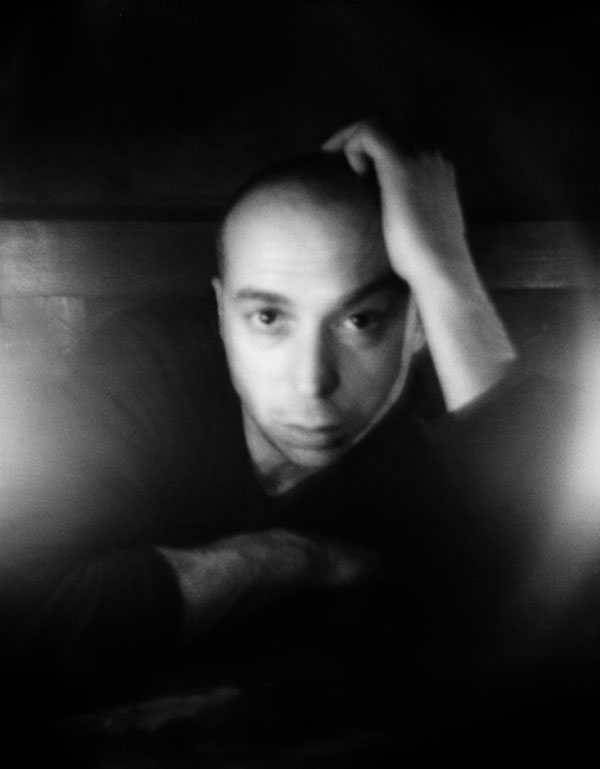
Lorenzo Castore
Michael AckermanBorn in 1967 in Tel Aviv, he grew up in New York. Since his first exhibition, in 1999, Michael Ackerman has made his mark by bringing a new, radical and unique approach. His work on Varanasi, entitled “End Time City, turned him into a cult photographer. In black and white, with permanent risk that led him to explore impossible lighting, he allowed the grainy images to create enigmatic and pregnant visions.
Michael Ackerman seeks – and finds – in the world he traverses, reflections of his personal malaise, doubts and anguish. Although his peculiar and unique style has turned him into the object of the most diverse critiques and debates, he is an indispensable author. He received the Infinity Award for Young Photographer by the International Center of Photography in 1998 and one year later the Nadar Award for his book “End Time City”. In 2009, he won the SCAM Roger Pic Award for his series “Departure, Poland” and in 2010 his book Half Life was published by Robert Delpire. Recently, he has collaborated with Vincent Courtois, cellist, and Christian Caujolle, behind the project, in a show called “L’intuition” which proposes a dialogue between photography and music creation. This show was presented, in particular, as part of the festival Banlieues Bleues and for the Rencontres d’Arles 2014.
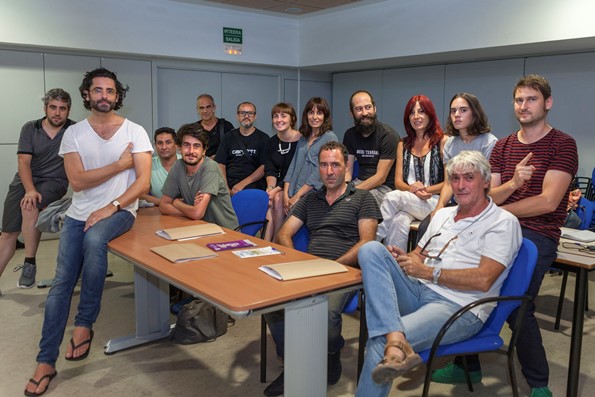
How do you wish to tell your story?
A masterclass with Frank Kalerko about new visual narratives
New technologies have made it easier the emergence of a large number of tools that contribute to enrich our photographic project both in the previous phases and during its execution.Frank Kalero, former commissioner of GETXOPHOTO, talked about formats and innovative perspectives analyzing different types of projects: interactive, immersive, multimedia, experimental documentaries, installations, video. He also reviewed new and old tools which used together can create new narrative formats.
Those participants interested in finding ways to improve the visual narrative of their work had the opportunity to show and share their portfolio.
Frank Kalero
Graduated in Audiovisual Communication. He was a resident at Benettonʼs Fabrica (Italy). He was the founder and director of the magazine OjodePez (Spain). Cofounder and director of the magazine Punctum in India. Also in India, he was the cofounder of Goaphoto. He has been the artistic director of the Photography Biennial PhotoQuai 2013 and 2015, in Paris. Master at the Joop Swart Masterclass of the World Press Photo, and president of the jury of the Pride Photo Award, both in Amsterdam. He is a co-founder of visual storytelling company Screen, New York, and as adviser to the Wyng Award, Hong Kong. He curated GETXOPHOTO from 2010 through 2012.
Book 2016
On sale at our online shop
Lock-in vol. 4
Lock-in is a format that reviews and challenges the conventional uses and consumption of photography. It lasts one day, packed with informal talks and dialogues, including lunch. Friendly atmosphere. At a remote place, so there is no easy escape for speakers or for attendees!
Program
Investing time
Culture and Economics. Two worlds frecuently too distant
Verónica Fieiras (photographer and editor)
Roberto Gómez de la Iglesia (economist and arts manager)
Jon Uriarte (photographer and critic)
From touchable to untouchable
From collecting to new narratives
Enrique Ordóñez (Ordóñez Foundation’s president)
Mónica Allende (graphic editor and curator)
Jokin Aspurur (director and curator of GETXOPHOTO)
Digital ecosystem
A giant who gobbles down us?
Rosalind Williams (curator)
Jon Uriarte (photographer and critic)Photography and movement get married
To a new cross sectional language
Albert Corbí (photographer and image theorist)
Koldo Almandoz (filmmaker)**Introduces: Jon Uriarte
PARTICIPANTS (Spanish)
ALBERT CORBÍ. Fotógrafo y teórico de la imagen
Nació en Alcoi, Alicante, en 1976. Ha participado en diferentes eventos internacionales como PhotoEspaña, Selected Project ARCO 2013 o el Festival de Arles. Ha obtenido importantes becas como la Marcelino Botín, Propuestas, Iniciarte o la Beca Velázquez, y galardones como el Premio Matadero, ABC y el Cultural. Ha participado en exposiciones colectivas en Matadero o Casa Encendida en Madrid y en IVAM, entre otras. Ha realizado residencias artísticas en Nueva York, Berlín, Bilbao, Barcelona y Sao Paulo. En la actualidad prepara un proyecto de investigación artística para el centro José Guerrero de Granada sobre los vínculos entre imagen, territorio y memoria.JON URIARTE. Fotógrafo y crítico
Nació en Hondarribia, Gipuzkoa, en 1979. Estudió Fotografía en el Institut d’Estudis Fotogràfics de Catalunya y en el International Center of Photography de Nueva York, además de un máster en Proyectos y Teorías Artísticas por PhotoEspaña y la Universidad Europea de Madrid. Ha expuesto en diversos centros, galerías de arte y festivales, tanto en muestras colectivas como individuales, entre los que destacan PhotoEspaña, La Casa Encendida de Madrid, el Koldo Mitxelena de Donostia, el Studio 304 de Nueva York, el centro HBC de Berlín y la Sala d’Art Jove de Barcelona. Actualmente vive en Barcelona, donde se dedica a la enseñanza.ROBERTO GÓMEZ DE LA IGLESIA. Economista, gestor cultural y director de c2+i Conexiones Improbables
Nació en Burgos y es licenciado en Ciencias Económicas por la Universidad del País Vasco. Fue fundador, director y Consejero delegado de Grupo Xabide durante 25 años. Conceptualizó y dirigió, entre 2004 y 2009, Divergentes y Disonancias, reconocida plataforma de relación entre artistas y empresas. Ha dirigido cientos de proyectos culturales y de impulso de los sectores creativos, de desarrollo local, de comunicación institucional, sensibilización pública entre otros campos. Es profesor de diversos Masters y Postgrados y conferenciante habitual invitado por muy diversas organizaciones públicas o privadas de España, Portugal, Brasil, Chile, Argentina o Perú. Es, además, autor, coautor y editor de diferentes publicaciones sobre Gestión Cultural, Comunicación, Patrocinio e Innovación.VERÓNICA FIEIRAS. Fotógrafa y editora independiente
Nacida en Argentina, es fotógrafa, editora y profesora de fotografía en EFTI. Es co-fundadora de RIOT BOOKS. Bajo este sello publica su primer libro, The Disappeared, nominado a mejor fotolibro del año en Kassel 2014, mejor fotolibro en Guatephoto Festival y expuesto en varios festivales de renombre alrededor del mundo. En 2015 edita y diseña el libro You Haven’t Seen Their Faces de Daniel Mayrit, ganador del premio Aperture-Paris Photo al mejor fotolibro del año. En 2016 funda la editorial CHACO con la idea de crear un puente entre Europa y America Latina.ENRIQUE ORDOÑEZ. Presidente de la Fundación COFF
Enrique Ordóñez es Presidente de la Fundación Centro Ordoñez-Falcón de Fotografía (COFF) creada junto a su mujer, Isabel Falcón. La Fundación gestiona una de las más importantes colecciones de fotografía en el ámbito privado y abarca de forma panorámica la fotografía desde 1860 hasta nuestros días. Comisario de numerosas exposiciones, talleres, conferencias y jornadas fue director del Centro Huarte de Arte Contemporáneo y creador e impulsor de la primera feria internacional de fotografía contemporánea DFOTO en Donostia. Actualmente es asesor de diversas instituciones y centros de arte en el campo de la fotografía.MÓNICA ALLENDE. Editora gráfica y comisaria
Nacida en Bilbao, estudió Ciencias Políticas en la Universidad de Londres. Es editora gráfica y productora cultural, así como co-fundadora de Offspring Photo Meet. Ha sido editora gráfica del Sunday Times Magazine, donde puso en marcha la premiada sección de fotografía Spectrum. Es profesora visitante en la London College of Communication y ha sido jurado en varios concursos internacionales como el de World Press Photo, de Visa pour l’Image o de la National Portrait Gallery. Produjo y comisarió Darfur: Images against impunity, exposición y publicación de Stanley Greene, Lynsey Addario y Álvaro Ybarra. Ha sido premiada en múltiples ocasiones: Premio de los Editores Gráficos a la Mejor Revista, Premio de Amnistía Internacional en la categoría de Fotoperiodismo o Mejor Uso de la Fotografía en los Premios de Diseño Gráfico.KOLDO ALMANDOZ. Director de cine
Nació en Donostia en 1973. Estudió Comunicación Audiovisual en la Universidad de Navarra y continuó sus estudios en la Universidad de Nueva York y en la Universidad Estatal de Boise. Es autor de varios cortometrajes, documentales y piezas experimentales, como Hubert Le Blonen azken hegaldia (El último vuelo de Hubert Le Blon, 2014), Deus et machina (2012), Ahate pasa (2009), Columba Palumbus (2007), Amuak (2004), Belarra (2002) y Razielen itzulera (El retorno de Raziel, 1998), que han sido seleccionados en numerosos festivales y por los que ha obtenido más de un centenar de premios. Es colaborador en diversos medios de comunicación, así como director de la revista The Balde desde el año 2003. Su última película, Sipo phantasma, ha sido seleccionada en los prestigiosos festivales de Rotterdam, de San Sebastián o el Bafici de Buenos Aires.ROSALIND WILLIAMS. Comisaria
Nacida en San Francisco, EEUU, trabajó en la Office of Public Information de la ONU. Posteriormente se trasladó a Madrid, donde fue profesora y directora de la Galería Redor, una de las primeras galerías de fotografía en España. En la actualidad es comisaria independiente. Ha organizado exposiciones y proyectos para el Ministerio de Cultura, el Ministerio de Asuntos Exteriores, la Fundaciò la Caixa, Caja Madrid y también para el Museo Centro de Arte Reina Sofía, El Institut Valenciano de Arte Moderno, el Centro Atlántico de Arte Moderno, entro otros. Colaboró estrechamente con Cornell Capa en la coordinación de proyectos relacionados con las fotografías de su hermano, el desaparecido Robert Capa. En otro ámbito, ha llevado a cabo una lucha anti-discriminatoria contra la identificación de ciudadanos por el perfil étnico en España desde 1992 hasta 2009, que culminó con una decisión histórica a su favor por parte del Comité de Derechos Humanos de las Naciones Unidas.